  |
|
|
Cornell University
:: Nutritional Sciences
:: NutritionWorks
:: features
:: Course
Preventing Childhood Obesity: An Ecological Approach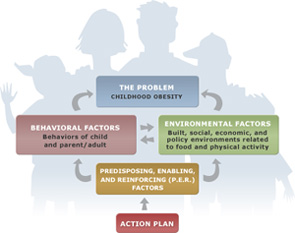 with
Christina Stark
with
Christina Stark
DescriptionThe next and final session of this course is scheduled for February 6 - March 19, 2013. Our priority audience for this course is county-based teams that consist of at least three people who represent extension nutrition, 4-H and the community. To encourage teams with this composition to enroll, we offer a reduced enrollment fee. Teams that fit these criteria will be given priority enrollment. Other teams and individuals will be accepted on a space available basis.
Those interested in the special team opportunity should contact Christina Stark, at cms11@cornell.edu , to obtain permission from the facilitator and information on how to register. This special opportunity is being made possible through an Agriculture and Food Research Initiative (AFRI) grant from USDA. Please note that it not clear when, or even if, this course will be offered again due to the uncertainly of funding.
For additional information, go to the Cornell NutritionWorks/eCornell Partner Page . If you would like be put on a list to receive priority notice when registration is open for the winter 2013 session, please indicate this preference under Notification Preferences on your Membership Page. This course will help you use an ecological approach to identify underlying causes of childhood obesity and begin developing an action plan for intervention in their communities. An ecological approach involves a series of assessments -- of behavior, of the environment, and specific local factors -- to help diagnose the underlying causes of excessive weight gain in children. During the course you'll use this approach, while focusing on a community where you work, via a four-part project that runs throught the course. A facilitator will interact with you throughout the course. Benefits
ObjectivesAfter completing this course, you will be able to:
Date Created: 2/6/13 |
||||||||||||||||||||||||||||||||||||||||
|
|||||||||||||||||||||||||||||||||||||||||




 About Us
 What’s New